JOURNAL · TAI CHI PRINCIPLES & MARTIAL ARTS
Push Hands is a Tai Chi partner practice in which another person gives you something solo practice cannot: changing external force. It tests whether the structure, relaxation, balance, sensitivity, and whole-body coordination you practice alone can still remain present when another person begins to push, pull, redirect, or disturb you.
IN THIS ARTICLE
What Is Tai Chi Push Hands?
Why Solo Practice Is Not Enough
Push Hands Is a Reality Check
1. It Tests Structure
2. It Tests Song and Jing Under Pressure
3. It Develops Sensitivity to Changing Force
4. It Tests Whole-Body Movement
5. It Teaches Timing Instead of Rushing
Is Push Hands the Same as Fighting?
Should Beginners Practice Push Hands?
What Does Push Hands Teach Beyond Martial Arts?
From Performing Tai Chi to Testing Tai Chi
What Is Tai Chi Push Hands?
Push Hands is a partner practice used in Tai Chi to explore how the body responds to changing external force.
Two practitioners make contact—often through the hands or forearms—and begin working with pressure, direction, balance, timing, and movement.
Depending on the level and method, the practice can be very simple or much more complex.
But the basic idea is not difficult to understand.
When you practice Tai Chi alone, you can concentrate on posture, weight shifting, Song, whole-body movement, breathing, and intention.
Then another person enters.
Suddenly, the movement is no longer completely under your control.
The direction changes.
The pressure changes.
Your balance may be challenged.
Your partner may respond differently from what you expected.
Now the question becomes:
Can the Tai Chi principles you practice alone survive when another person changes the situation?
Why Solo Practice Is Not Enough
I value solo Tai Chi practice deeply.
Standing, walking, circling, fundamental exercises, and forms all give us time to investigate ourselves.
But solo practice has one important limitation.
The air is very forgiving.
You can move through it with poor alignment, unnecessary tension, or incomplete coordination and still complete the movement.
Your hand reaches the correct place.
The posture may even look beautiful.
But appearance does not tell you everything about structure.
This is something I explored in Tai Chi Ray’s Notes No. 2 — Swimming in the Air.
Water gives immediate feedback because it resists us.
Air usually does not.
Push Hands brings a different kind of resistance back into the practice.
The partner becomes part of the environment.
Now the movement has consequences.
Push Hands Is a Reality Check
This is why I think of Push Hands as a kind of reality check.
You may believe your posture is stable.
Then someone applies pressure from an unexpected direction.
You may believe your shoulders are relaxed.
Then someone begins disturbing your balance and they immediately rise toward your ears.
You may believe your movement comes from the whole body.
Then you see an opportunity to push and your arms rush forward before the rest of the body is ready.
None of these discoveries means the practice has failed.
The discovery is the practice.
Push Hands does not exist to prove that your Tai Chi is good. It exists to show you where your Tai Chi disappears under pressure.
1. It Tests Structure
A Tai Chi posture can look correct without being structurally reliable.
This is one of the limitations of visual practice.
You can imitate the position of the feet.
You can place the hands at the correct height.
You can make the torso look upright.
But what happens when force enters that structure?
Does the body remain organized?
Or does the pressure immediately collapse one area, lift another, or break the connection between the upper and lower body?
Push Hands gives us information that a mirror cannot provide.
A partner may push from one direction and reveal that your weight is too far back.
Another direction may expose a shoulder that is disconnected from the torso.
A small pull may reveal that your feet and upper body are not working together.
This is why I have written that visually graceful Tai Chi does not automatically mean strong or correct structure. External force helps test what the eye cannot confirm. :contentReference[oaicite:2]{index=2}
2. It Tests Song and Jing Under Pressure
Push Hands also changes the meaning of Song (鬆) and Jing (靜).
It is one thing to feel calm and relaxed while standing alone.
It is another thing when somebody begins moving your center.
The habitual reaction is easy to recognize.
The shoulders tighten.
The legs grip.
The chest stiffens.
The mind becomes anxious.
We try to protect ourselves by using more tension.
But excessive tension may reduce our ability to adapt.
This is why I often ask:
The real test is not whether you can relax when nothing is happening. Can you remain relaxed and responsive when your balance is challenged?
Push Hands makes Song practical.
It also makes Jing practical.
Can the mind continue noticing what is happening rather than immediately entering panic or blankness?
This is one reason these ideas can take a lifetime to deepen.
3. It Develops Sensitivity to Changing Force
Push Hands is sometimes misunderstood as a contest of pushing strength.
That interpretation misses one of its most interesting qualities.
The contact between two people gives us information.
You begin learning to feel:
Where is the pressure going?
Is it increasing or decreasing?
Is the direction changing?
Where is your partner’s weight moving?
Where is your own balance changing?
Are you resisting something that is already moving somewhere else?
This connects directly with the Tai Chi principle I explored in Why Does Tai Chi Let the Opponent Move First?
The goal is not simply to react faster.
It is to notice sooner.
A simplified sequence is:
receive → sense → adapt → respond
Push Hands gives us a controlled environment in which to investigate that sequence repeatedly.
4. It Tests Whole-Body Movement
Another important test appears when you have an opportunity to push.
You sense that your partner is momentarily off balance.
Your instinct says:
Now!
The arms rush forward.
The hands arrive quickly.
But did the whole body arrive with them?
This is exactly the problem I raised in Tai Chi Ray’s Notes No. 4.
Moving one part of the body quickly may feel efficient, but if the action has lost its connection to the feet and the rest of the body, the push may have little root. :contentReference[oaicite:3]{index=3}
So Push Hands asks the same two questions I use in fundamental practice:
Where did the movement begin?
Did the whole body participate?
If those questions matter during a simple arm swing, they matter even more when another person is responding to us.
5. It Teaches Timing Instead of Rushing
Push Hands also teaches that moving quickly and moving at the right time are not the same thing.
You may feel an opening and rush immediately.
But if you act too early, your partner may still be stable.
If you commit too much, you may expose your own balance.
If you wait too long, the opportunity disappears.
This makes timing inseparable from sensitivity.
You cannot choose the right moment if you cannot feel what is changing.
The lesson is not:
Be slow.
Nor is it:
Be fast.
It is:
Respond when the relationship makes the response appropriate.
This is another reason Push Hands fits naturally with 舍己从人.
You are not forcing every exchange to follow a predetermined plan.
You are learning from the relationship as it develops.
Is Push Hands the Same as Fighting?
No.
Push Hands comes from the martial side of Tai Chi, but it should not automatically be confused with fighting or free sparring.
In good training, the partner is not merely an enemy trying to defeat you.
The partner is also giving you information.
This distinction matters.
If the only goal becomes:
Push the other person harder.
then beginners may quickly return to the habits Tai Chi is trying to examine:
muscular tension,
rushing,
bracing,
using only the arms,
and prioritizing victory over awareness.
Competition can eventually test useful qualities.
But competition introduced too early can also hide them.
For me, the first question in Push Hands is not:
Who won?
It is:
What did the contact reveal?
Should Beginners Practice Push Hands?
Beginners do not need to start with aggressive or complicated Push Hands.
But simple partner feedback can be extremely useful.
For example, one person can apply very light, controlled pressure while the other simply observes what happens.
Do the shoulders tense?
Does the body lean?
Does one foot lose contact with the ground?
Does breathing stop?
Does the practitioner immediately push back?
The pressure does not need to be large.
In fact, lighter pressure often gives beginners more opportunity to notice.
The purpose is not to overwhelm the structure.
The purpose is to reveal it.
As awareness improves, the practice can gradually become more dynamic.
What Does Push Hands Teach Beyond Martial Arts?
You may never use Push Hands in a physical confrontation.
That does not mean the lessons disappear outside martial arts.
Life introduces external forces constantly.
A subway car suddenly accelerates.
You lose your balance on uneven ground.
You push something heavier than expected.
Someone bumps into you.
You have to react before there is enough time for conscious analysis.
Your original notes already connect Push Hands feedback with external forces such as movement on a train: both can reveal structure, balance, and how quickly the body reorganizes itself. :contentReference[oaicite:4]{index=4}
The circumstances are different, but the questions are familiar:
Do I tense immediately?
Can I feel what changed?
Can my whole body respond?
Can I regain balance without panic?
This is why I see Push Hands as more than a martial exercise.
It is an environment for learning how the body behaves when the world stops cooperating with our plan.
From Performing Tai Chi to Testing Tai Chi
Solo practice gives us an essential place to learn.
We stand.
We shift.
We circle.
We practice Song.
We investigate structure and whole-body movement.
But eventually, another question becomes necessary:
What happens when something pushes back?
This is where Push Hands becomes valuable.
It takes principles that can remain comfortable and theoretical during solo practice and places them inside a changing relationship.
Structure is tested.
Song is tested.
Jing is tested.
Balance is tested.
Sensitivity is tested.
Timing is tested.
Whole-body movement is tested.
And perhaps most importantly, our assumptions about ourselves are tested.
The point is not to prove that our Tai Chi works perfectly.
The point is to discover where it does not.
Push Hands begins when Tai Chi stops being something you perform alone and becomes something another person can question.
FROM TAI CHI RAY’S NOTES
Second Step: Fundamentals, Fundamentals, Fundamentals
This article develops the Push Hands ideas in Tai Chi Ray’s Notes No. 4, where I ask whether Jing, Song, grounding, and whole-body movement can remain present when another person challenges your balance or when an opportunity to apply force suddenly appears.
CONTINUE READING
Why Does Tai Chi Have Martial Intention If You Don’t Fight?
Push Hands tests Tai Chi structure and sensitivity through another person, but that raises a more basic question: if you have no interest in fighting, why preserve the martial purpose of the movements at all? Continue by exploring how martial intention gives Tai Chi posture direction, structure, and meaning—even for practitioners who never plan to use it in a fight.
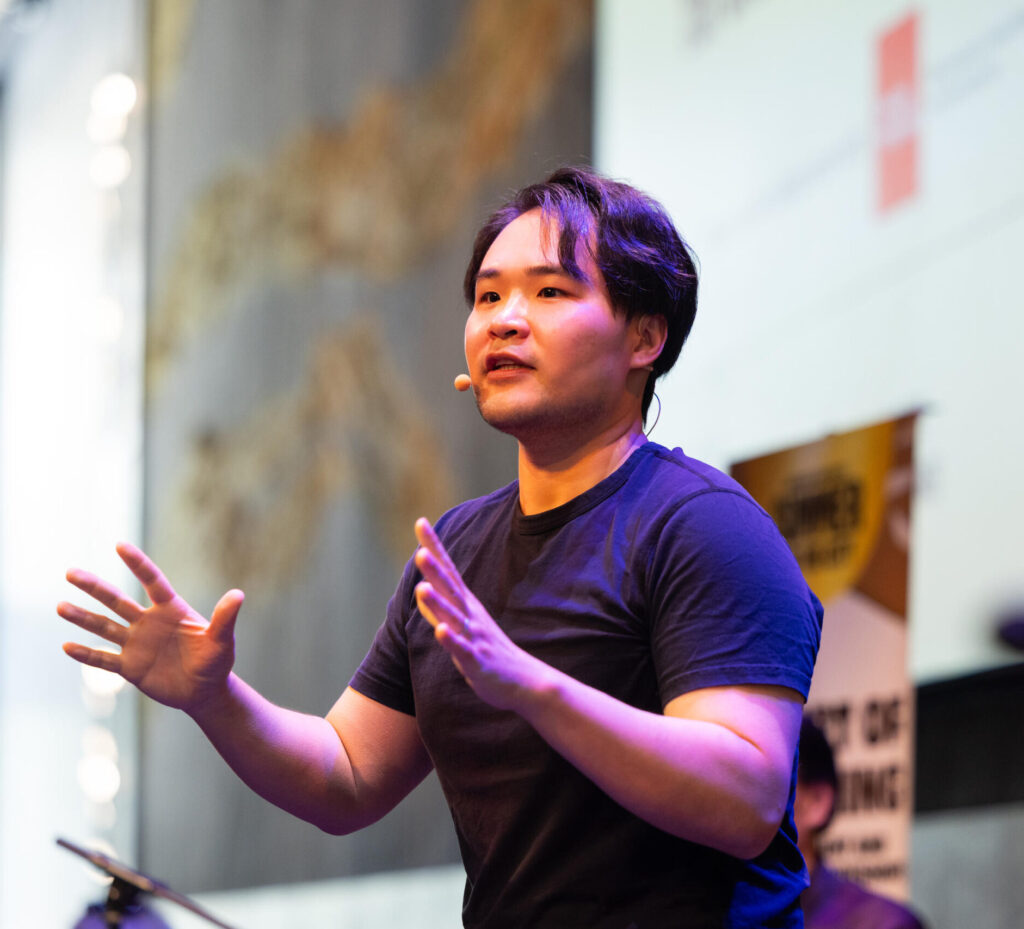
Raymond Lee
Tai Chi Ray
Raymond Lee (Tai Chi Ray) is a Tai Chi teacher, martial arts practitioner, and writer who has been teaching and sharing Tai Chi in New York since 2017. He began practicing martial arts at the age of seven and grew up in a family with more than five generations of involvement in Traditional Chinese Medicine. Ray explores Tai Chi through structure, coordination, awareness, natural movement, and the integration of body and mind. His work seeks not only to preserve traditional principles, but to make them understandable and meaningful in contemporary life.