JOURNAL · BODY & AWARENESS
Tai Chi walking may look simple from the outside: slow steps and gentle shifts of weight. But internally, a great deal is happening. Tai Chi walking trains how we stand, transfer weight, balance on one leg, organize the body around its central axis, coordinate movement with breathing, and remain aware during every transition.
IN THIS ARTICLE
What Is Tai Chi Walking?
Why It Is Not Just Slow Walking
Before Walking, Learn to Stand
Walking Is Really a Practice of Weight Shifting
Every Step Contains a Moment of Single-Leg Balance
The Long Axis: More Than Moving the Legs
Tai Chi Walking Is Like Composing a Sentence
Walking Reveals What Ordinary Walking Can Hide
How Should a Beginner Start?
Can You Practice Tai Chi Walking Indoors?
Learning How to Walk Again
What Is Tai Chi Walking?
Tai Chi walking is a mindful way of walking rooted in the principles of Tai Chi.
From the outside, it may not look very impressive.
You take a slow step.
You shift your weight.
You stabilize.
Then you take another step.
But inside those simple actions, you can be practicing many things at once:
- body alignment,
- weight-shifting control,
- single-leg balance,
- the organization of the body around its long axis,
- whole-body coordination,
- breathing, and
- awareness of how the body moves through space.
This is why I consider Tai Chi walking an integral part of the larger Tai Chi training system.
It is not merely a slower version of ordinary walking.
It is ordinary walking turned into something we can study.
Tai Chi walking is not simply about taking slower steps. It is about becoming aware of everything that happens between one stable position and the next.
Why It Is Not Just Slow Walking
If you walk across a room at your normal speed, you probably do not consciously think about every weight shift.
You do not stop to ask exactly when one foot becomes light enough to leave the floor.
You do not constantly monitor the relationship among your feet, hips, spine, shoulders, and hands.
That is a good thing.
Walking has become largely automatic.
But automatic movement also means that many habits can remain unnoticed.
Tai Chi slows walking down enough for us to examine it.
When the movement becomes slower, questions begin appearing:
Where is my weight?
Am I really stable before I step?
Why does one side feel easier than the other?
Why do my shoulders become tense when I balance on one leg?
Does my torso move with my legs, or am I moving in separate pieces?
This is the difference between simply slowing down and practicing Tai Chi walking.
The goal is not slowness itself.
The slowness gives us time to feel.
Before Walking, Learn to Stand
When beginners ask me how to start Tai Chi walking, my advice may sound strange:
Don’t focus on walking first. Focus on standing.
Why?
Because every step begins from a standing relationship with the ground.
If we do not know how our weight is supported before the step begins, slowing down the walking will not automatically solve the problem.
Standing gives us a simpler place to investigate:
Where is my weight?
Are both feet carrying the same amount?
Are my knees locked?
Am I gripping unnecessarily with my legs?
Is my upper body organized comfortably over my base?
Can I breathe without holding unnecessary tension?
Once we begin feeling those relationships while standing on two feet, the next step is not immediately walking across the room.
It is often learning to shift enough weight onto one leg that the other leg can become light.
Then walking begins to emerge from standing.
Walking Is Really a Practice of Weight Shifting
One of the most important parts of Tai Chi walking happens before the foot moves.
The weight has to change.
If I want to step with my left foot, I first need enough stability through my right side for the left foot to become available.
This sounds obvious.
But slow it down and the process becomes surprisingly interesting.
Many beginners begin reaching with the stepping foot before the supporting side is fully organized.
The body starts moving forward while part of the weight is still caught between the two legs.
Then the step becomes something closer to falling forward and catching ourselves.
Tai Chi walking asks us to make the transition clearer.
Stabilize.
Shift.
Empty one leg.
Step.
Transfer.
Then repeat.
This does not mean walking like a robot.
These are learning stages.
Eventually, the transitions should become continuous.
But before movement can become smooth, it helps to know what is actually changing.
Every Step Contains a Moment of Single-Leg Balance
Walking is often described as a two-legged activity.
But every step contains a period in which one leg has to support most—or effectively all—of the body’s weight while the other leg moves.
Tai Chi walking makes this transition much more obvious because we perform it slowly.
If you rush through the transition, momentum can hide instability.
If you slow it down, you have to actually own the balance.
This is one reason I sometimes think of single-leg standing as the next level after basic standing.
Before moving the empty foot very far, ask:
Can I remain organized on the supporting leg?
You may immediately notice differences between your left and right sides.
One side may feel stable.
The other may wobble.
One hip may feel free.
The other may tighten.
Your toes may grip the floor.
Your shoulders may tense even though the challenge is happening below the waist.
Tai Chi walking makes these habits visible to your awareness.
That is part of its value.
The Long Axis: More Than Moving the Legs
Tai Chi walking is also not simply a lower-body exercise.
The whole body participates.
One concept I frequently use in teaching is the long axis—an imaginary vertical line running through the body from head to toe.
You may also hear me call it the center line, middle line, or the hinge of the body.
As we step, shift weight, and change direction, the body organizes around this central relationship.
The torso may rotate.
The hips have to respond.
The shoulders and arms participate without becoming disconnected from what is happening below.
This is particularly important when Tai Chi walking begins to include turning.
If the feet go one direction while the upper body behaves independently, we lose the whole-body quality we are trying to develop.
So although we call it Tai Chi walking, the practice eventually includes much more than the legs.
The feet take the steps, but the whole body has to walk.
Tai Chi Walking Is Like Composing a Sentence
I often compare learning Tai Chi with learning a language.
English is a second language for me, so this analogy has always felt natural.
Knowing vocabulary is not enough to create a good sentence.
The words have to be placed into a structure.
Grammar gives them relationships.
Breathing and pauses influence the rhythm.
And the sentence changes depending on what we are trying to communicate.
Tai Chi walking works in a similar way.
I think of:
body parts as the alphabet,
body structure and basic Tai Chi dynamics as the grammar,
and coordination with breathing as part of the rhythm of the sentence.
Walking brings these elements together.
The foot placement alone is not the Tai Chi.
The weight shift alone is not the Tai Chi.
The posture alone is not the Tai Chi.
The breathing alone is not the Tai Chi.
The practice begins to become meaningful when these elements start forming relationships.
In that sense, one Tai Chi step is already a sentence.
Walking Reveals What Ordinary Walking Can Hide
Tai Chi walking looks simple, but simplicity can be unforgiving.
When there are fewer movements to memorize, there are fewer distractions from what the body is actually doing.
You may discover:
- that one side carries weight differently from the other,
- that your balance changes before you expected,
- that certain joints feel stiff,
- that your posture changes when you step,
- that you hold unnecessary tension, or
- that moving slowly makes your mind surprisingly restless.
None of these discoveries means you are bad at Tai Chi.
The discovery is the practice.
I often tell my students:
Don’t worry about looking like Tai Chi. Focus on feeling what is happening inside.
This connects Tai Chi walking to a larger idea in my teaching.
The goal is not merely to produce a beautiful external movement.
We want to develop enough internal awareness that we can increasingly feel posture, alignment, balance, and movement rather than depending entirely on appearance.
The slow step becomes a way of listening to the body.
How Should a Beginner Start?
You do not need to begin by crossing a park in a deep Tai Chi stance.
In fact, I would rather a beginner practice a few controlled steps well than struggle through a long distance.
Start simply.
- Stand first.
Feel both feet and notice how your weight is distributed. - Shift without stepping.
Move your weight gradually toward one side and notice when the opposite foot becomes lighter. - Explore single-leg balance.
Do not force a long hold. Simply recognize the moment when one leg becomes the clear supporting leg. - Place the empty foot.
Take a comfortable step without rushing your body weight onto it. - Transfer gradually.
Feel how the new leg begins accepting your weight. - Notice the whole body.
Check whether your shoulders, torso, breathing, and balance are participating comfortably. - Repeat with patience.
Five attentive steps can teach you more than crossing a room while your mind is somewhere else.
Do not force yourself into a stance that is too low or too long simply because it looks more like Tai Chi.
Your stance should give you enough challenge to learn while still allowing you to remain organized.
As your awareness and control improve, the walking can gradually become richer.
Can You Practice Tai Chi Walking Indoors?
Absolutely.
You do not need a park or a large studio.
A living room, hallway, community room, or other small, safe space can be enough.
The essence of the practice is not distance.
It is the quality of attention you bring to each transition.
You can practice a few steps forward.
A few steps backward.
Sideways stepping.
Gentle turning.
Then repeat.
Indoor practice can actually be useful because the environment is more controlled.
Outdoor practice offers different information: uneven surfaces, changing light, wind, temperature, and other environmental conditions.
I like to summarize the relationship this way:
Indoors, you refine the fundamentals. Outdoors, you test and expand them.
Neither environment is inherently better.
They teach different things.
Learning How to Walk Again
Walking is one of the first major movement skills we learn as human beings.
Then we practice it so often that we eventually stop paying attention.
Tai Chi walking turns attention back toward something that has become automatic.
Where is my weight?
Am I stable before I step?
Can one leg support me without unnecessary tension?
How does my torso organize above my feet?
Can my breathing remain natural?
Can the whole body participate in one simple step?
This is why Tai Chi walking can become much deeper than it first appears.
We are not really learning a strange new way to walk.
We are using walking as a laboratory for understanding movement.
And once we begin paying attention, an ordinary step is no longer quite ordinary.
Tai Chi walking is not about how far you walk. It is about how much you can feel inside each step.
RELATED READING
Should Beginners Learn a Tai Chi Form First?
Tai Chi walking is a good example of why beginners do not always need more choreography in order to learn more Tai Chi. A few carefully practiced steps can become a laboratory for structure, balance, weight shifting, coordination, and awareness.
CONTINUE READING
What Is Tai Chi Walking?
If beginners do not need to rush into memorizing a long Tai Chi form, what can they practice instead? Tai Chi walking shows how something as simple as a few steps can become a complete study of standing, weight shifting, balance, body structure, coordination, and awareness.
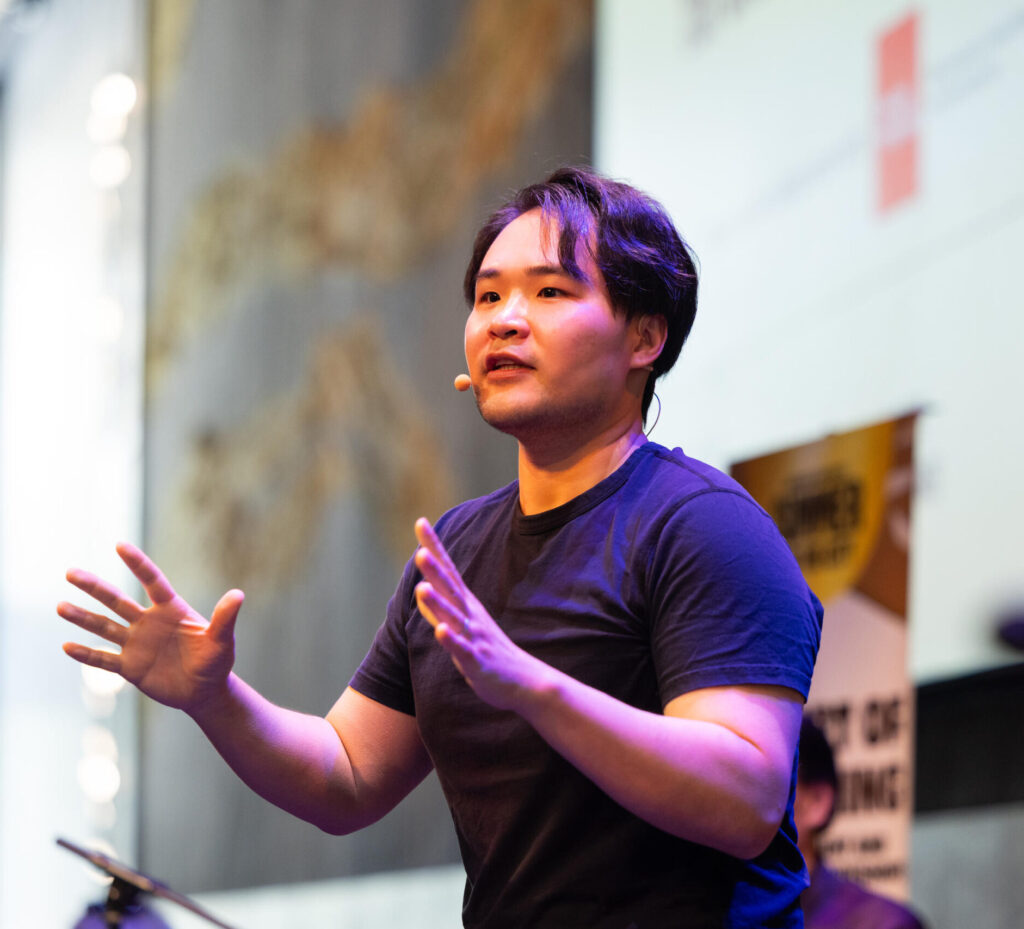
Raymond Lee
Tai Chi Ray
Raymond Lee (Tai Chi Ray) is a Tai Chi teacher, martial arts practitioner, and writer who has been teaching and sharing Tai Chi in New York since 2017. He began practicing martial arts at the age of seven and grew up in a family with more than five generations of involvement in Traditional Chinese Medicine. Ray explores Tai Chi through structure, coordination, awareness, natural movement, and the integration of body and mind. His work seeks not only to preserve traditional principles, but to make them understandable and meaningful in contemporary life.