JOURNAL · LEARNING & PRACTICING TAI CHI
Should a beginner start Tai Chi by learning a complete form? My answer is: not necessarily. A Tai Chi form is valuable, but memorizing a long sequence is not the same as learning Tai Chi. I prefer to help beginners first develop the alphabet and grammar of Tai Chi—body awareness, structure, weight shifting, relaxation, coordination, and a few fundamental movements—so that the form eventually becomes something they understand rather than simply something they remember.
IN THIS ARTICLE
The Short Answer
What Is a Tai Chi Form?
Why Do So Many Beginners Start With a Form?
Memorizing a Form Is Not the Same as Learning Tai Chi
Learning Tai Chi Like Learning a Language
What Should Beginners Learn First?
How Much Can You Learn From One Movement?
So When Should You Learn a Form?
A Better Way to Begin Tai Chi
The Form Is Not the Destination
The Short Answer
No, I do not believe every Tai Chi beginner needs to start by memorizing a complete form.
But that does not mean I am against Tai Chi forms.
Forms are an important part of Tai Chi. They preserve movements, transitions, directions, rhythms, martial ideas, and relationships that have been passed from one generation to another.
A form can also be an excellent practice.
The problem begins when we confuse learning the sequence with learning Tai Chi.
A beginner may successfully remember twenty-four movements and still have very little understanding of how to organize the body within those movements.
Another beginner may know only three or four movements but already be developing awareness of balance, weight shifting, structure, relaxation, coordination, and intention.
If I had to choose between those two students, I would rather build the second foundation.
A Tai Chi form is valuable. But memorizing the form is not the same as learning Tai Chi.
What Is a Tai Chi Form?
A Tai Chi form is a choreographed sequence of movements practiced continuously in a particular order.
Depending on the style and school, a form might contain a relatively small number of movements or a much longer sequence.
When people first encounter Tai Chi, the form is often what they recognize.
They see a group moving slowly together:
the hands circle,
the body turns,
the weight shifts,
one posture flows into another.
It is beautiful to watch.
And naturally, a beginner thinks:
That is Tai Chi. I need to learn how to do that.
That conclusion makes sense.
But what we see from the outside is only one layer of the practice.
The sequence tells us what comes next.
It does not automatically teach us how the body should work.
Why Do So Many Beginners Start With a Form?
There are good reasons to teach a form to beginners.
I want to make that clear because my argument is not that teaching forms to beginners is somehow wrong.
A form gives students structure.
There is a clear sequence to follow and a sense of progress as more movements are learned.
The complexity can also demand concentration.
A beginner who is trying to remember where the feet, hands, and body go next may temporarily have little attention left for the usual chatter of the mind.
For some people, that experience itself can be valuable.
And eventually, a form gives us a larger framework in which many Tai Chi principles can be practiced together.
So the question is not:
“Are Tai Chi forms good or bad?”
The better question is:
What should a beginner have underneath the form?
Memorizing a Form Is Not the Same as Learning Tai Chi
Over the years, I have watched many beginners encounter the same problem.
Tai Chi looks graceful when an experienced practitioner performs it.
But learning several things at once can quickly become overwhelming.
A student concentrates on the right arm and forgets the left.
Then the hands look better, but the weight shift disappears.
Then the feet are corrected, and the shoulders become tense.
Meanwhile, the student is also trying to remember which movement comes next.
This creates an enormous amount of information for a beginner to manage at once.
Some people respond by trying harder to memorize the choreography.
They become better at remembering the order.
But remembering the order does not necessarily correct what is happening inside each movement.
A student can therefore become very good at reproducing the external outline of a form while repeatedly practicing the same poor coordination inside it.
This is why I do not want beginners to judge progress mainly by asking:
“How many movements do I know?”
I would rather they ask:
“What am I learning about my body from the movements I already know?”
Learning Tai Chi Like Learning a Language
I often compare learning Tai Chi with learning a language.
Imagine that you want to learn English.
Would the best first lesson be memorizing a passage from A Tale of Two Cities?
You might eventually recite it beautifully.
Your pronunciation might even sound convincing.
But could you create a new sentence?
Would you understand what you were saying?
I learned this lesson in a funny way when I was around ten years old.
I was an only child and became bored practicing an English text by myself, so I persuaded—or perhaps forced—my nanny to recite it with me word by word.
She had taken care of me since I was six and was a very dear person in my childhood.
After several days, something remarkable happened.
She could recite the first paragraph fluently.
Her pronunciation even sounded surprisingly natural.
There was only one problem.
She did not understand what the words meant.
And because she did not understand the language, she could not take those words and create a new sentence of her own.
This experience eventually gave me a useful way to think about Tai Chi.
Learning a Tai Chi form before understanding the fundamentals can be like memorizing a beautiful paragraph in a language you do not yet speak.
The form is not the problem.
The problem is mistaking recitation for fluency.
What Should Beginners Learn First?
If the complete form does not have to come first, what should?
I think of Tai Chi fundamentals as something like the alphabet and grammar of a language.
Before asking a beginner to manage a long sequence, I want them to begin developing a relationship with their own body.
That can include:
- Standing — learning how the body organizes itself while relatively still.
- Weight shifting — recognizing where the body weight is and how it moves from one foot to another.
- Song (鬆) — reducing unnecessary tension without collapsing.
- Basic structure — developing relationships among the feet, legs, pelvis, spine, shoulders, and hands.
- Whole-body coordination — learning not to treat every movement as an isolated action of the arms.
- Body awareness — feeling position and movement from within rather than depending entirely on visual imitation.
- Simple circling and arm-swing exercises — using uncomplicated movements to investigate Tai Chi principles.
These exercises may not look impressive.
Some may look like warm-ups.
But when they are practiced with Tai Chi principles, they are not preparation for the “real Tai Chi.”
They are Tai Chi.
This is why I return to fundamentals constantly, even with experienced students.
How Much Can You Learn From One Movement?
Beginners often assume that knowing more movements means becoming more advanced.
I understand why.
More movements are easy to count.
Ten movements sounds more advanced than three.
A long form sounds more impressive than a simple arm swing.
But Tai Chi does not deepen only by adding quantity.
Take one simple movement.
You can investigate:
Where is your weight?
Where did the movement begin?
Are your shoulders unnecessarily tense?
Is the arm moving by itself?
Can the feet and ground participate?
Can your breathing remain natural?
Do you understand the intention of the movement?
Can you perform it without looking at yourself?
What happens when the direction changes?
What happens when someone gives you external feedback?
Suddenly, one movement is no longer simple.
It contains layers.
This is why I wrote in Tai Chi Ray’s Notes No. 3:
One movement can contain the entire universe of Tai Chi movements.
I do not mean that every movement is literally identical.
I mean that the fundamental principles of the art can begin revealing themselves inside even a very small piece of practice.
Once you understand that, learning slowly no longer feels like falling behind.
So When Should You Learn a Form?
You do not need to wait until your fundamentals are perfect.
If that were the requirement, none of us would ever begin a form.
The relationship should be more flexible.
Learn some fundamentals.
Learn a few movements.
Return to the fundamentals.
Connect those movements.
Discover a problem.
Return again.
Then gradually expand the sequence.
In this way, the form and the fundamentals can develop together.
The difference is that the form no longer becomes a race.
You do not have to finish twenty-four movements as quickly as possible so that you can say you “know the form.”
Instead, each new movement becomes another place to test what you have already been learning.
Can you remain Song?
Can you shift your weight clearly?
Can your movement remain connected?
Can you preserve your structure while changing direction?
Can you understand the Yi (意), or intention, behind the movement?
The form then becomes useful in a much deeper way.
Fundamentals and form should grow together. The mistake is allowing the sequence to grow faster than the understanding underneath it.
A Better Way to Begin Tai Chi
If you are completely new to Tai Chi, I would not worry about how quickly you can learn a full sequence.
Instead, give yourself a simpler first goal:
Learn how Tai Chi asks you to use your body.
Begin with standing.
Learn to shift weight.
Practice a few fundamental movements.
Notice unnecessary tension.
Learn the difference between moving an arm and moving through the whole body.
Develop enough internal awareness that you do not need your eyes to supervise every joint.
Then begin connecting movements.
The form will still be there.
And when you learn it, you will have more tools for understanding what is inside it.
This approach may feel slower at the beginning.
But learning fewer movements is not necessarily slower learning.
If the movements you practice are teaching you principles that will appear again and again throughout Tai Chi, you are building something reusable.
The Form Is Not the Destination
A Tai Chi form is a remarkable container.
It can preserve generations of movement, martial ideas, rhythm, structure, and practice.
But a container is useful because of what it contains.
If beginners become obsessed with memorizing the container, they can miss what the form was designed to help them practice.
So should beginners learn a Tai Chi form?
Yes—but they do not necessarily need to begin by chasing the whole form.
Begin with the alphabet.
Learn some grammar.
Make a few sentences.
Then the larger composition begins to mean something.
The same is true in Tai Chi.
Learn to stand.
Learn to feel.
Learn to shift.
Learn to relax without collapsing.
Learn how one movement can involve the whole body.
Then allow the form to connect those principles into something larger.
The goal is not to become someone who can remember Tai Chi.
The goal is to become someone whose body begins to understand it.
Do not measure your Tai Chi only by how many movements you remember. Ask how much you understand inside the movements you already know.
FROM TAI CHI RAY’S NOTES
First Step: Don’t Chase After Movements
This article develops the central question of Tai Chi Ray’s Notes No. 3: whether learning more movements is really the same as learning more Tai Chi. In the original Note, I explore why going deeply into a small number of movements can reveal principles that appear throughout the entire art.
CONTINUE READING
How Does Tai Chi Walking Improve Balance?
Tai Chi walking makes every weight shift, single-leg transition, and change of direction easier to observe. Continue by exploring how this slow practice trains the movement skills behind balance—including weight transfer, body awareness, alignment, relaxation, and the ability to remain organized while conditions change.
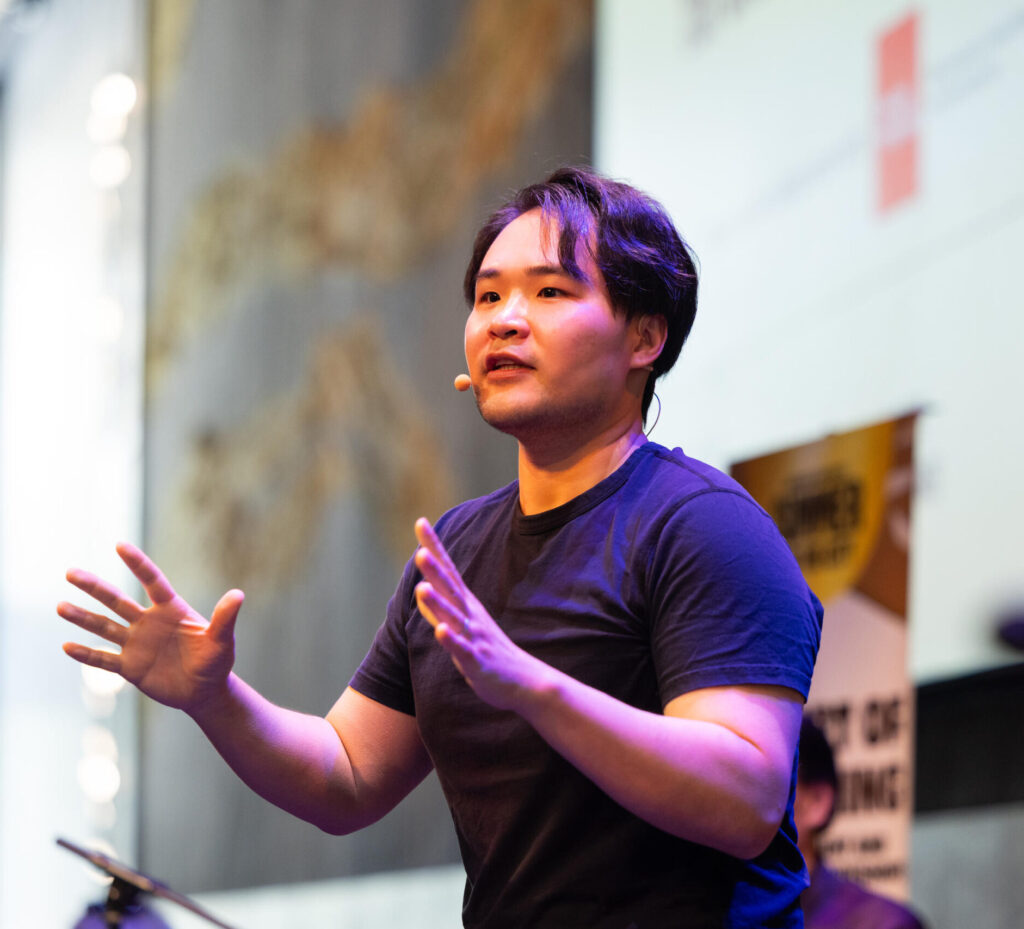
Raymond Lee
Tai Chi Ray
Raymond Lee (Tai Chi Ray) is a Tai Chi teacher, martial arts practitioner, and writer who has been teaching and sharing Tai Chi in New York since 2017. He began practicing martial arts at the age of seven and grew up in a family with more than five generations of involvement in Traditional Chinese Medicine. Ray explores Tai Chi through structure, coordination, awareness, natural movement, and the integration of body and mind. His work seeks not only to preserve traditional principles, but to make them understandable and meaningful in contemporary life.