JOURNAL · TAI CHI PRINCIPLES & MARTIAL ARTS
Many people practice Tai Chi for balance, relaxation, body awareness, or well-being and have no desire to fight anyone. So why should martial intention matter? Because the martial purpose of a movement is not only about fighting. It helps explain why the body is organized the way it is—where the hands go, how weight shifts, what the posture protects, and how the whole body participates in one purposeful action.
IN THIS ARTICLE
The Short Answer
A Shape Without a Purpose
What Do I Mean by Martial Intention?
Cloud Hands: Why the Position Is Not Arbitrary
Martial Intention and Yi (意)
Martial Intention Organizes the Whole Body
It Gives Structure Something to Solve
Self-Defense Is Not the Same as Fighting
Why This Still Matters in Everyday Practice
How to Practice Martial Intention Without Turning Class Into Fighting
The Movement Needs a Reason
The Short Answer
No, you do not need to want to fight in order for martial intention to matter in Tai Chi.
The value of martial intention is not limited to learning how to strike, block, or push another person.
Its deeper value is that it gives the movement a reason to exist.
Why is this hand near the head?
Why is the other hand lower?
Why does the body turn instead of remaining square?
Why does the weight shift before the arm moves?
Why should the shoulders remain relaxed instead of stiffening?
A martial context gives these questions consequences.
The posture is no longer just:
“Put your hand here because this is what the form looks like.”
It becomes:
“The hand is here because the movement is trying to accomplish something.”
Martial intention gives a Tai Chi movement a problem to solve.
A Shape Without a Purpose
One of the easiest ways to misunderstand Tai Chi is to learn only its external shape.
You watch the teacher.
You raise one arm.
You lower the other.
You turn the waist.
You shift your weight.
Eventually, the movement may look very good.
But there is still an important question:
Why are you doing it?
I do not mean:
“Why are you practicing Tai Chi?”
I mean something more specific:
Why does this particular movement have this particular shape?
Without an answer, the posture can gradually become choreography.
The hands occupy positions because those are the positions we memorized.
The body turns because that is what comes next in the sequence.
The movement may remain graceful.
But some of its internal logic has disappeared.
This is why I do not separate the martial origin of Tai Chi completely from the way I teach movement.
You may never use the movement in a fight.
But understanding what it was designed to do can help you understand how it should be organized.
What Do I Mean by Martial Intention?
When I use the phrase martial intention, I do not mean imagining yourself violently attacking someone every time you practice.
That would be a very narrow interpretation.
Martial intention means understanding the practical purpose inside the movement.
A posture may be:
- protecting an area of the body,
- receiving incoming force,
- redirecting pressure,
- creating or maintaining distance,
- changing the relationship between two bodies, or
- expressing force through a connected structure.
Once you understand that purpose, the posture becomes easier to investigate.
You can ask:
Does this position actually support what I think the movement is doing?
Is my body organized behind the action?
Am I protected while I move?
If external pressure arrives, can the structure adapt?
These are martial questions.
But they are also movement questions.
Cloud Hands: Why the Position Is Not Arbitrary
Cloud Hands gives us a simple example.
When my grandfather taught me the movement, he taught me to use relative positions within my own body instead of relying entirely on visual imitation.
In one position, one hand is around the level above the eyebrow while the other is below the navel.
If I learn only the choreography, I might memorize:
One hand high. One hand low.
But that does not explain the position.
My grandfather taught me that the hands relate to protecting vulnerable areas such as the head and groin.
Now the posture has meaning.
The positions are not decorative.
They are not simply there because a Tai Chi master centuries ago preferred that particular shape.
The martial intention creates a relationship between the hands and the body they are protecting.
Once I understand that relationship, I no longer have to think only:
“Is my hand at the correct height?”
I can also ask:
“Is my hand in a position that makes sense for what the movement is trying to do?”
When you understand what a posture is protecting or responding to, its shape begins to make sense from the inside.
Martial Intention and Yi (意)
This connects directly with Yi (意).
Yi is often translated as “intention,” but in my teaching I use the term to mean something more embodied: a focused intention that helps organize the whole body toward purposeful action.
Every Tai Chi posture has an external movement.
But the external movement is only the visible layer.
Yi helps give that movement direction, structure, and meaning.
Martial intention is one of the clearest ways to experience this.
If my intention is merely:
“Move my arm across my body,”
the body may organize one way.
If my intention becomes:
“Protect this space while receiving and redirecting something coming toward me,”
the same outward movement may become very different internally.
The eyes may see similar shapes.
The body is solving a different problem.
I explore this idea more deeply in What Does Yi (意) Mean in Tai Chi?
Martial Intention Organizes the Whole Body
Martial intention also helps prevent Tai Chi from becoming a collection of arm movements.
Imagine a push.
If the instruction is simply:
“Push your hand forward,”
the arm can perform most of the work by itself.
But suppose the movement has to work against external resistance.
Now another question appears:
What is supporting the hand?
The feet matter.
The legs matter.
The relationship with the ground matters.
The waist and torso matter.
The spine and shoulders matter.
The arm becomes the visible end of a larger organization.
This is why martial intention and whole-body movement naturally belong together.
When a movement has a practical task, disconnected movement becomes easier to recognize.
A hand that looks correct may not be enough.
Martial intention asks the whole body to participate in what the hand appears to be doing.
It Gives Structure Something to Solve
Tai Chi structure can otherwise become abstract very quickly.
We can talk about posture.
Alignment.
Grounding.
Long axis.
Song.
Whole-body connection.
But structure is not valuable simply because it looks organized.
Structure exists to allow us to manage forces while remaining able to move.
Martial intention gives structure a test.
If the posture is supposed to protect you from force arriving in a certain direction, can the body actually remain organized when that force arrives?
If the movement is supposed to redirect pressure, can it do so without the shoulders stiffening?
If you intend to push, does the movement remain connected to the ground?
This is why Push Hands becomes important.
It introduces another person who can question the assumptions we make during solo practice.
You may feel perfectly grounded until someone touches you.
You may feel perfectly relaxed until your balance begins to change.
You may believe the whole body is connected until you suddenly see an opportunity and rush forward with only your arms.
Martial intention gives the movement purpose.
External feedback tells you whether your body can support that purpose.
For more on that testing process, see What Is Push Hands in Tai Chi—and Why Does It Matter?
Self-Defense Is Not the Same as Fighting
Another reason people reject martial intention is that they equate martial arts with wanting to fight.
I think that misses the larger meaning of self-defense.
The purpose of self-defense is not to create more fighting.
The purpose is to remain safe.
If a dangerous situation can be avoided, avoidance may be the best response.
If you can leave, leaving may be better than proving your skill.
If you can receive and redirect force instead of meeting it head-on, that may be better than entering a contest of strength.
This is one reason Tai Chi’s martial philosophy interests me.
Its deeper questions are not always:
How do I hit harder?
They can be:
How do I remain protected?
How do I avoid unnecessary collision?
How do I stay calm when something stronger than me changes the situation?
How do I use my body more efficiently?
Those questions remain meaningful even if you never intend to fight anyone.
This is also the logic behind Why Does Tai Chi Let the Opponent Move First?
Why This Still Matters in Everyday Practice
Most people will never need to use a Tai Chi posture in a physical confrontation.
But the body skills revealed by martial intention appear in less dramatic situations all the time.
You lose your balance unexpectedly.
You push a heavy door.
You catch something before it falls.
A subway car suddenly moves.
Someone bumps into you.
An object turns out to be heavier or lighter than expected.
In those moments, the same underlying questions appear:
Can your body remain organized when conditions change?
Do you immediately stiffen?
Can your weight shift?
Can the whole body participate instead of one part overreacting?
Can you sense the change before you panic?
This does not mean that opening a door is secretly a martial arts technique.
It means that martial training places movement principles under conditions where they become easier to test.
The lessons can then travel beyond the martial setting.
How to Practice Martial Intention Without Turning Class Into Fighting
You do not need to hit anyone to begin practicing martial intention.
Choose one Tai Chi movement you already know.
Then investigate it in layers.
- Learn the external shape.
Know the basic hand positions, stance, direction, and weight shift. - Ask what the movement is doing.
Is it protecting, receiving, redirecting, creating space, or expressing force? - Notice how the purpose changes your body.
Does understanding the intention change where you place the hands or how you organize the torso? - Check the whole body.
Are the feet and center involved, or is the movement happening mainly in the arms? - Practice slowly.
Give yourself time to feel whether the body supports the intention. - Add light external feedback when appropriate.
A knowledgeable partner can gently test whether the structure remains organized.
The purpose is not to make every Tai Chi session aggressive.
It is the opposite.
Martial intention can make the movement clearer without making the practice violent.
Once you know why a posture exists, you may actually need less imagination and less theatricality.
The movement has enough meaning already.
The Movement Needs a Reason
So why does Tai Chi preserve martial intention if many practitioners never intend to fight?
Because martial intention is part of the architecture of the movement.
It tells us why the hands are where they are.
Why the body turns.
Why weight shifts.
Why structure matters.
Why Song matters.
Why the whole body has to participate.
And why another person’s force can teach us things that solo choreography cannot.
You do not have to become interested in fighting.
But if you remove every martial question from Tai Chi, you may eventually remove some of the reasons the movements were organized the way they were.
Then the form remains.
The shape remains.
The beauty may remain.
But part of the meaning has disappeared.
For me, martial intention is not about making Tai Chi more violent.
It is about making the movement more intelligible.
You do not need to fight to understand martial intention. You need martial intention to understand why the movement is more than a shape.
FROM TAI CHI RAY’S NOTES
Second Step: Fundamentals, Fundamentals, Fundamentals
This article develops an idea from Tai Chi Ray’s Notes No. 4: every Tai Chi posture contains more than its visible movement. Yi and martial intention give the posture direction, structure, and meaning, helping us move from copying an external shape toward understanding what the movement is trying to accomplish.
CONTINUE READING
Why Does Tai Chi Let the Opponent Move First?
Balance practice teaches us not to panic when the body begins to change. Tai Chi applies a similar principle when another person introduces force: rather than reacting immediately with tension or resistance, we learn to receive information, adapt, and respond. Continue with the traditional principle of 舍己从人 and the defensive logic behind letting the opponent reveal the movement first.
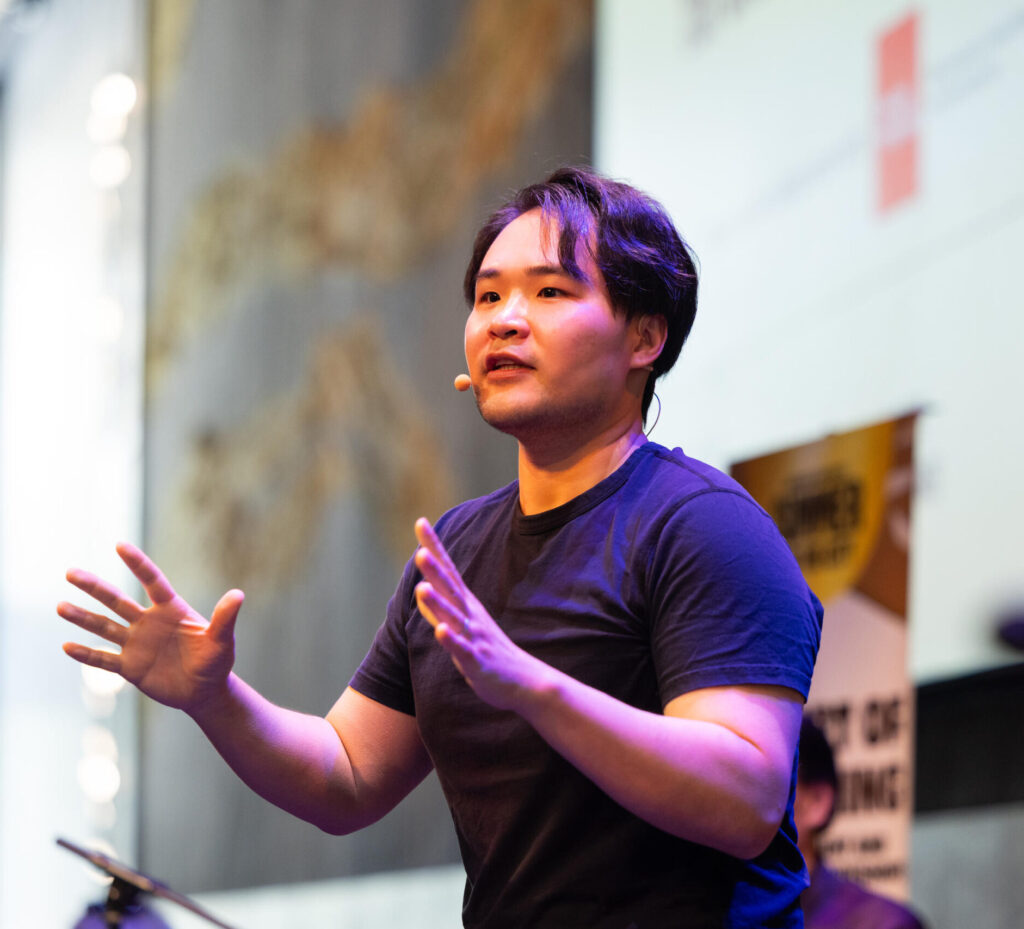
Raymond Lee
Tai Chi Ray
Raymond Lee (Tai Chi Ray) is a Tai Chi teacher, martial arts practitioner, and writer who has been teaching and sharing Tai Chi in New York since 2017. He began practicing martial arts at the age of seven and grew up in a family with more than five generations of involvement in Traditional Chinese Medicine. Ray explores Tai Chi through structure, coordination, awareness, natural movement, and the integration of body and mind. His work seeks not only to preserve traditional principles, but to make them understandable and meaningful in contemporary life.