JOURNAL · TAI CHI PHILOSOPHY & LIFE
Waiting for an elevator, standing in line, or sitting on a subway platform may seem like empty time. But these small pauses can reveal something interesting about us: how quickly we feel the need to fill every quiet moment. Instead of treating waiting as time to escape, I have begun to see it as one of the simplest places to bring Tai Chi into daily life.
IN THIS ARTICLE
- What Do We Do When Nothing Is Happening?
- What I Noticed in an Elevator
- Waiting Is Also a Habit
- Redirect the Habit Instead of Fighting It
- How to Turn Waiting Into Tai Chi Practice
- Follow the Moment Instead of Resisting It
What Do We Do When Nothing Is Happening?
Think about the last time you were waiting for an elevator.
Or standing in a checkout line.
Or sitting in a doctor’s office before your name was called.
What did you do?
For many of us, the answer is almost automatic: we reach for our phones.
There may be no message we need to answer. There may be nothing in particular we need to check. But the moment nothing is happening, we begin looking for something to happen.
I have noticed this habit in myself.
And one day, an ordinary elevator ride made it especially clear.
What I Noticed in an Elevator
My wife and I were waiting for an elevator. Around us, several people were looking at their phones.
After a moment, my wife took out her phone too.
Then I took out mine.
I scrolled once. Then again.
And suddenly I asked myself:
What am I looking for?
I was not waiting for an important message. I did not need any information. There was nothing I had intended to check.
I had simply reached for the phone.
Later, my wife described almost the same feeling. Everyone around her was doing something, so she felt as though she should be doing something too.
When nothing is happening, we can become strangely uncomfortable with doing nothing.
The elevator had not created a problem.
Waiting had not created a problem.
What interested me was the automatic response that appeared in that small empty space.
Waiting Is Also a Habit
Habits often begin with a cue.
Something happens, we respond in a familiar way, and that response gives us some kind of reward.
Waiting can become one of those cues.
Nothing is happening.
We reach for the phone.
We scroll.
For a moment, we receive novelty, stimulation, or simply relief from having nothing to do.
There is nothing inherently wrong with looking at a phone. The interesting question is whether we actually chose to do it.
Or did the action happen before we were even aware that a choice existed?
This is where I think Tai Chi becomes relevant.
One of the things Tai Chi practice gradually develops is the ability to notice what is happening before automatically reacting to it.
We notice weight before stepping.
We notice tension before trying to release it.
We notice the breath before trying to change it.
And perhaps we can also notice an impulse before automatically following it.
Redirect the Habit Instead of Fighting It
I do not think the solution is to declare war on our phones.
That can easily turn into another form of tension: “I should not look at my phone. I need to be more mindful. I need to use my time better.”
Instead, I prefer the idea of redirection.
The cue can remain the same:
Nothing is happening.
But the routine can change.
Instead of:
Nothing is happening → reach for the phone → look for stimulation
we can experiment with:
Nothing is happening → notice the breath → return to the body
The goal is not to make every moment productive.
In fact, that would miss the point.
Waiting does not have to become productive time. It can simply become conscious time.
Sometimes one breath is enough.
How to Turn Waiting Into Tai Chi Practice
The next time you find yourself waiting, you do not need to perform a Tai Chi form.
You do not need to assume a special posture.
You do not even need to close your eyes.
Simply notice what is already happening.
1. Notice the impulse to fill the space.
Before reaching for your phone, see whether you can recognize the impulse itself.
You do not have to stop it. Just notice it.
2. Feel where you are standing or sitting.
If you are standing, feel your feet on the ground.
Notice where your weight is.
If you are sitting, notice how your body is being supported.
3. Notice one breath.
Do not immediately try to make it deeper.
First notice the breath you already have.
Are the shoulders rising?
Is the abdomen being held?
Can the ribs move without unnecessary effort?
If you find yourself forcing the breath, I explore this more fully in How to Practice Diaphragmatic Breathing Without Forcing It.
4. Allow unnecessary tension to settle.
Perhaps the shoulders can soften.
Perhaps the jaw can release.
Perhaps the hands do not need to grip the phone quite so tightly.
Do not try to manufacture relaxation. Simply notice what effort may no longer be necessary.
5. Let waiting remain waiting.
This may be the most difficult part.
You do not need to turn the moment into an achievement.
You are simply standing in an elevator.
You are simply waiting for the subway.
You are simply sitting before an appointment.
For a few moments, that can be enough.
Follow the Moment Instead of Resisting It
There is a traditional Tai Chi principle that I return to often: 舍己从人—let go of yourself and follow the other.
In martial practice, this principle has a very specific meaning. Instead of imposing your movement too early, you receive what is coming, sense it, adapt to it, and then respond.
I explore that martial meaning more fully in Why Does Tai Chi Let the Opponent Move First?.
But I also find something useful in this principle outside martial practice.
When the elevator is slow, the elevator is slow.
When the line is long, the line is long.
When the subway has not arrived, it has not arrived.
Our first impulse may be to resist the situation—to become impatient, search for distraction, or mentally demand that the moment become something other than what it is.
What happens if, instead, we first receive the situation as it is?
This does not mean becoming passive. And it does not mean that we should never act to change circumstances.
It simply means that our response does not always have to begin with resistance.
Sometimes the first response is simply to receive the moment before deciding what to do with it.
That, to me, is one way Tai Chi begins to move beyond formal practice.
Tai Chi in the Spaces Between Things
When I was younger, practicing Tai Chi meant setting aside time to practice Tai Chi.
I still believe formal practice matters. We need time to stand, practice movements, repeat fundamentals, and study the principles carefully.
But over the years, I have become increasingly interested in what happens between those formal practices.
How do I stand while waiting?
What happens to my breathing when I become impatient?
How quickly do I react to boredom?
Can I notice the impulse before following it?
Can I receive the situation before resisting it?
These moments may last only a few seconds. They may not look like Tai Chi at all.
Perhaps that is exactly why they matter.
Because when Tai Chi begins to appear while we are waiting for an elevator, standing in line, or sitting quietly before an appointment, the boundary between practicing Tai Chi and living our lives becomes a little less clear.
FROM TAI CHI RAY’S NOTES
Third Step: Bring Tai Chi into Your Daily Life
This article develops an everyday practice I explore in Tai Chi Ray’s Notes No. 5: using the small periods of waiting in ordinary life as opportunities for breathing and awareness. In the Note, I look more broadly at how awareness, breathing, and movement can carry Tai Chi beyond formal practice and into daily life.
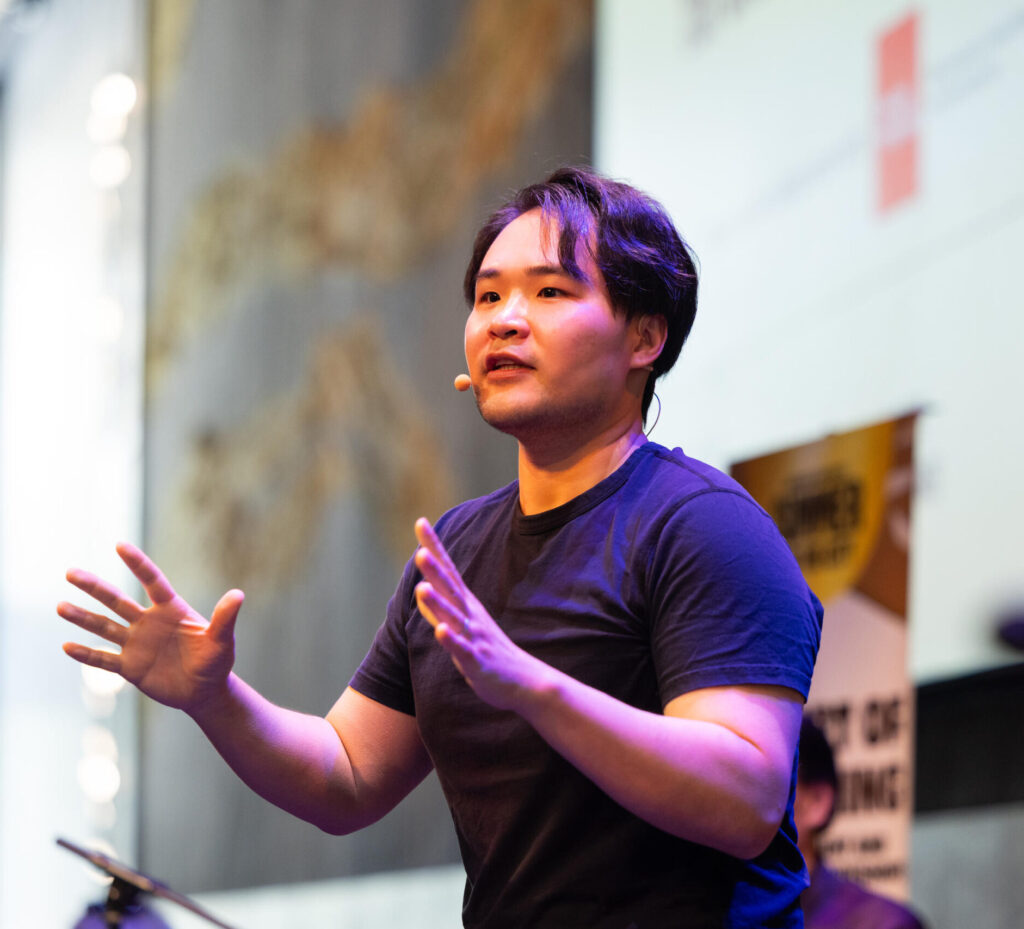
Raymond Lee
Tai Chi Ray
Raymond Lee (Tai Chi Ray) is a Tai Chi teacher, martial arts practitioner, and writer who has been teaching and sharing Tai Chi in New York since 2017. He began practicing martial arts at the age of seven and grew up in a family with more than five generations of involvement in Traditional Chinese Medicine. Ray explores Tai Chi through structure, coordination, awareness, natural movement, and the integration of body and mind. His work seeks not only to preserve traditional principles, but to make them understandable and meaningful in contemporary life.