TAI CHI RAY’S NOTES · NO. 5
Learning Tai Chi in a classroom is only a starting point. The deeper practice is learning how to carry its principles with us when class is over.
In my previous two notes, I shared what I consider the first two steps toward practicing Tai Chi in a more traditional way.
The first is: Don’t chase after movements.
The second is: Fundamentals, fundamentals, fundamentals.
This naturally brings us to the third step: How do we take what we practice in Tai Chi class and apply it to the rest of our lives?
Although we did not meet to practice together during the summer, I had a very productive summer in my own Tai Chi life. I began looking at the Tai Chi within me almost from a third-person perspective.
As I wrote in my first note, “To me, Tai Chi is a lifestyle and a way of natural living.”
This summer, I became curious about what that actually means.
I began observing how Tai Chi has gradually entered the way I stand, breathe, walk, eat, respond to stress, and even wait for an elevator. I also began trying to describe these experiences in English and, where appropriate, looking at what modern science might help us understand about them.
Learning Tai Chi in a classroom is only a starting point. The deeper practice is learning to carry its principles with us after class.
For me, there are three particularly useful places to begin:
Awareness. Breathing. Movement.
1. Awareness: Use Wuji Standing Meditation to Discover Your Habits
Integrating Tai Chi into daily life begins with something deceptively simple:
We have to notice what we are already doing.
Many of the patterns that gradually affect our well-being are habitual. We may breathe shallowly, hold our shoulders up, sit or stand with unnecessary tension, move before our balance is established, or become physically carried away by an emotion before we even realize what is happening.
But how can we catch those habitual patterns in the first place?
One of my answers is through Wuji (無極) standing practice.
When you practice Wuji standing meditation, you give yourself dedicated, undisturbed time to feel, explore, and interact with your body–mind. Because there is no complicated choreography to distract you, surprisingly simple questions become interesting.
How is my posture?
Is my spine leaning slightly to one side?
How are my shoulders hanging? Am I unconsciously holding them up? Can they settle a little more?
Can I allow my skeletal structure to carry more of my weight without unnecessary muscular tension?
What are my thighs and glutes doing? Can I relax them even more?
How am I breathing? Am I breathing shallowly or deeply? Can my breathing gradually become even deeper and slower?
How are my senses doing? What am I feeling through my skin? What sounds am I hearing? Am I immediately labeling those sounds by searching my memory?
Can I notice whether I experience something as pleasant or unpleasant?
Or does a vague conversation coming from another apartment start me down a memory lane?
Is my brain replaying what happened to me—or even imagining alternative outcomes?
And then suddenly:
What if? What if? What if?
Oh—I am daydreaming again.
Can I catch the moment when a simple sensation begins to trigger a memory, a story, or an imagined future?
We do not need perfect answers to these questions.
What we need is genuine observation, sincerity, curiosity, and compassion toward ourselves.
Establish Your Song (鬆) Benchmark
Wuji standing meditation practice can help you establish what I call your personal Song (鬆) benchmark.
Song is not simply being loose. It is being relaxed but structured; relaxed but ready. If you want to explore this idea more deeply, read What Does Song (鬆) Really Mean in Tai Chi?
Once you begin to recognize how this state feels, something interesting happens: you also become better at recognizing when you have left it.
One of my students once told me that immediately after finishing a Tai Chi session, she checked her work email.
She saw an email from her boss.
Before she had even read the message, she noticed that her shoulders had risen and her whole body had contracted.
Nothing had physically touched her.
The subject line of an email had changed her body.
Because she had just spent time establishing her Song benchmark, the contrast was obvious.
After recognizing this pattern, she began noticing it in other situations as well. Whenever she caught herself becoming tense, she would pause, take a few breaths, and return to several cues she had learned through Wuji:
Shoulders settle.
Spine rises.
Body opens.
Breathe.
The important change was not that tension disappeared from her life.
She had learned to notice it sooner.
Bringing Awareness to the Dinner Table
The same student had lived with Irritable Bowel Syndrome (IBS) for many years. She often experienced bloating, gas, cramping, and digestive discomfort, particularly during busy workdays and business meals.
I want to be clear that I am not presenting Tai Chi or Wuji standing meditation practice as a treatment for IBS. I am sharing one student’s experience, with her permission.
During Wuji standing meditation practice, I ask students to notice saliva collecting in the mouth while the tongue rests gently near the upper palate.
For her, this sensation unexpectedly brought back a childhood memory.
As a little foodie, she remembered standing in her grandmother’s kitchen, watching food cook and smelling its aroma. Before she had taken a single bite, her mouth would already begin watering.
She had never thought much about it. And she did not realize that this process was preparing her body–mind for the food.
Now she began creating a small ritual before eating.
She would look at the food.
Smell it.
Appreciate it.
And give her body a moment to arrive at the meal before she began eating.
At business dinners, she tried not to give 100 percent of her awareness to the conversation while eating mechanically. She remained attentive to her clients while also keeping some awareness of her food and her own body.
For her, this became another expression of Tai Chi: remaining alert without losing restfulness—Yang and Yin existing together.
She told me that she began feeling much better.
Again, her experience is not medical evidence. What interests me is the principle underneath it:
Awareness learned during practice had begun following her into ordinary life.
So before we continue, let me ask you:
How is your posture right now?
2. Breathing: A Practice You Can Carry Everywhere
If someone told me they could integrate only one Tai Chi practice into daily life, I would choose diaphragmatic breathing.
Breathing is special because we practice it whether we intend to or not.
We take thousands of breaths every day. That makes breathing one of the most frequently repeated movements of the human body.
So instead of thinking only about “practicing breathing” for ten minutes, consider another possibility:
What if the way you naturally breathe begins to change?
What Is Diaphragmatic Breathing?
In traditional Chinese medicine, breathing is closely associated with the Lung and with the traditional concept of Lung Qi (energy).
Modern physiology describes the process differently.
When we inhale diaphragmatically, the diaphragm—a dome-shaped muscle beneath the lungs—contracts and descends. This increases the volume of the chest cavity and helps draw air into the lungs.
When breathing is also slow and comfortable, it can influence autonomic regulation. Research on voluntary slow breathing has found increases in vagally mediated heart rate variability, which is associated with parasympathetic regulation—the branch of our autonomic nervous system commonly associated with “rest and digest.”
This is one reason slow, comfortable breathing may leave us feeling calmer and more settled.
Breathing is also not simply air moving in and out of the lungs.
Every breath creates movement throughout the torso. As the diaphragm descends and rises, pressures within the chest and abdomen change, and internal organs move rhythmically with respiration.
Traditional practices sometimes describe this as a kind of internal massage. I prefer to treat that as an image rather than a literal anatomical description.
What interests me most is something simpler:
Breathing is movement happening inside us all day long.
Traditional Chinese thought often connects healthy breathing with vitality. I would not translate traditional ideas such as Lung Qi directly into modern physiology, but I think they point toward an insight worth remembering:
True vitality is not only about what our muscles look like from the outside. It also depends on how well the fundamental processes inside us are functioning.
Breathing is one of those fundamentals.
“Why Can’t I Breathe into My Belly?”
When beginners first practice diaphragmatic breathing, some tell me:
“I can’t get the air into my belly.”
“My belly doesn’t expand very much.”
The first thing to understand is that air never actually enters your belly. It goes into your lungs.
The belly moves because the diaphragm descends during inhalation, gently displacing the contents of the abdomen and allowing the abdominal wall to expand.
For many adults, however, this does not initially feel natural. We may habitually breathe with greater upper-chest movement, particularly when stressed, or we may unconsciously hold tension in the abdomen.
So do not force your belly outward.
And do not try to “push” the breath down into your stomach.
Instead, begin as we do in Wuji.
Find Song.
Allow unnecessary muscular tension to soften while your structure remains supported. Then allow the lower torso to expand naturally as you inhale.
You may notice expansion not only in the front of the belly but around the lower ribs, sides, and even the back.
I sometimes ask students to imagine themselves expanding gently like a balloon—or a jellyfish floating in the ocean.
The movement may initially be very small.
That is perfectly fine.
Tai Chi is not asking you to take the biggest breath possible.
We are not forcing ourselves to breathe more. We are learning to interfere with breathing less.
If diaphragmatic breathing feels difficult—or if you find yourself trying to push the belly outward—I explore the practice in more detail in How to Practice Diaphragmatic Breathing Without Forcing It.
Turn Waiting into Practice
If diaphragmatic breathing is new to you, one of the easiest ways to bring it into daily life is to practice during what we normally consider “waiting time.”
Waiting for the subway.
Standing in a checkout line.
Sitting in a doctor’s office.
Taking an elevator.
In a broader sense, of course, no moment of life is truly disposable. Every moment is precious and irreplaceable. But our minds often treat these moments simply as means to the end between where we are and where we want to be.
One day, my wife and I stepped into an elevator. Several passengers were looking at their phones. My wife took out hers.
And without thinking, I took out mine.
After scrolling twice, something in me woke up.
What am I looking for?
There was not even a signal in the elevator.
I became curious.
Perhaps I was unconsciously imitating the people around me. Perhaps my mind simply disliked having nothing to do. When I later asked my wife why she had taken out her phone, she gave a very simple answer:
“Everyone was doing something. I felt like I needed something to do.”
Once I noticed this behavior in the elevator, I began catching it elsewhere.
But how might we reshape a habit in a Tai Chi way?
In my article Why Does Tai Chi Let the Opponent Move First?, I discussed a traditional principle sometimes expressed as “let go of yourself and follow the other.” I think this principle offers an interesting way to approach our habits as well.
A simple way to think about habits is as a loop involving a cue, a routine, and some form of reward. In my case, waiting had become a cue:
Nothing is happening → take out phone and scroll → receive a quick stream of novelty, stimulation, and occasional reward.
Over time, waiting itself can become a cue for reaching for the phone.
So I began experimenting with a different response.
I did not try to eliminate the cue.
I redirected what followed it.
Nothing is happening → breathe → serenity and awareness.
Next time you find yourself waiting and automatically reaching for your phone, try leaving it in your pocket.
Feel the air entering through your nose.
Feel your lower torso gently expand.
Imagine yourself floating and breathing like a jellyfish in the ocean.
For thirty seconds, let waiting become practice.
This, to me, is a very Tai Chi way of changing a habit:
Do not fight the situation. Follow what is already happening and redirect it.
I explore this idea more deeply in Turn Waiting Into Tai Chi Practice, including how the ordinary impulse to fill empty moments can become an opportunity for breathing and awareness.
Try It Before Bed
Bedtime can be another opportunity.
Research on slow breathing before sleep is promising, particularly for people’s subjective experience of sleep, although the evidence for objective improvements in sleep is still developing.
So rather than promising that diaphragmatic breathing will make you sleep better, I simply invite you to experiment.
Lie comfortably and place your hands over your abdomen.
As you inhale, feel the lower torso gently expand into your hands.
As you exhale, let it soften again.
You can imagine yourself floating in water like a jellyfish—expanding as you rise, softening as you settle.
I first shared this with my wife one night, when racing thoughts made it difficult for her to fall asleep.
She fell asleep after several rounds of breathing.
Now she enjoys the practice so much that sometimes she invites me to practice with her. But we imagine something slightly different.
Instead of two jellyfish, we become two otters holding hands and floating down a river.
Perhaps Tai Chi does not always have to be serious.
How about trying it tonight?
3. Movement: Let Daily Life Become Your Practice
The third practice is to bring Tai Chi movement principles into ordinary life.
You do not need to perform Cloud Hands while reaching for groceries or practice a Tai Chi form while waiting for the subway.
What we want to carry into daily life is not necessarily the movements of Tai Chi, but the principles underneath those movements.
I have explored these ideas more deeply in articles such as Why Tai Chi Movement Starts From the Ground, What Is Tai Chi Walking?, and How Does Tai Chi Walking Improve Balance? Here, I want to focus on a few principles you can begin practicing immediately.
Before You Move, Find the Ground
One question I frequently ask my students is:
Where did the movement begin?
If you push open a heavy door, you may think the movement begins with your hand.
If you lift a suitcase, you may think it begins with your arm.
Tai Chi asks us to look deeper.
Before the hand moves, what is happening under your feet?
Where is your weight?
How are you relating to gravity and the ground?
In Tai Chi, I often teach that movement begins with a change in our relationship with the ground and our weight. The visible movement may eventually appear in the hand, but the hand does not have to work alone.
The movement can connect through the body:
feet → legs → waist → spine → shoulders → arms → hands
This is not meant to become a rigid mechanical sequence. Eventually, we should not experience eight body parts moving one after another.
The deeper goal is one connected action.
Try it the next time you push open a heavy door.
Instead of immediately pushing harder with your arm, first feel your feet.
Allow your weight to organize behind the movement.
Then let the arm participate.
You can explore the same principle while pulling a suitcase, carrying groceries, rising from a chair, or reaching for something on a shelf.
Ask yourself:
Am I asking one part of my body to do the work, or is my whole body participating?
Daily life gives us thousands of opportunities to investigate this question.
Stabilize Before You Step
Another important Tai Chi principle appears in something we have done since childhood: walking.
We are so familiar with walking that we rarely examine what actually happens during a step.
In Tai Chi, before we learn to walk, we learn how to stand.
That is one reason Wuji appears at the beginning of our practice.
Every step begins with a relationship to the ground.
Before one foot can move freely, the other side must be ready to support you.
If you want to step with your left foot, for example, your weight first organizes over the right side. The left leg becomes lighter—or, in traditional Tai Chi language, more empty.
Then the empty foot can move.
I often describe the process this way:
Stabilize. Shift. Empty. Step. Transfer.
In ordinary walking, momentum allows us to move through these phases so quickly that we rarely notice them.
Tai Chi slows the process down so that we can feel them.
The question becomes:
Can you own your balance before you move?
This becomes particularly interesting when the environment is less predictable.
Stepping off a curb.
Walking down stairs.
Entering a slippery bathroom.
Moving across uneven ground.
Stepping onto a subway car.
You do not need to suddenly start walking in slow motion.
From the outside, nothing has to look unusual.
The practice is happening inside:
Find your balance. Then move.
Turn Ordinary Movement Into Tai Chi Practice
This is one reason I believe Tai Chi can gradually become a lifestyle rather than something we do only in class.
A Tai Chi class may last an hour or two.
But throughout the rest of the day, you are constantly standing, walking, turning, reaching, pushing, pulling, sitting down, and standing up again.
Each movement can become a small laboratory.
When you rise from a chair, feel your feet before standing.
When you walk down stairs, notice whether your weight is supported before committing to the next step.
When you push a door, notice whether your shoulder and arm are working alone.
When you change direction, notice whether your whole body participates.
When you momentarily lose your balance, notice whether your first reaction is to tense your entire body.
You do not need to correct everything.
First, just notice.
And that brings us back to where this note began.
Tai Chi After Class
Wuji standing meditation teaches us to notice.
Through Wuji, we begin establishing a benchmark for Song—relaxed, structured, and ready.
Breathing gives us a practice that can follow us almost anywhere.
Movement principles then allow that awareness to enter the way we physically interact with the world.
Awareness → Breathing → Movement.
Eventually, the boundary between “practicing Tai Chi” and “living your life” can become less clear.
You are practicing when you notice your shoulders rising after reading an email.
You are practicing when an elevator ride becomes an opportunity to breathe rather than scroll.
You are practicing when you feel the ground before taking a step.
You are practicing when you let your whole body participate instead of forcing one joint to do all the work.
You are practicing when you notice tension before automatically reacting to it.
None of these looks like a Tai Chi form.
Perhaps that is exactly the point.
When I was younger, practicing Tai Chi meant setting aside time to practice Tai Chi.
Today, Tai Chi increasingly appears in the spaces between those formal practices.
It appears in how I breathe.
How I stand.
How I walk.
How I wait.
How I respond.
And perhaps this is what I meant years ago when I first began saying:
Tai Chi is a lifestyle and a way of natural living.
The third step, then, is not simply to practice more Tai Chi.
It is to let the Tai Chi you have already practiced gradually enter your life.
You do not have to do more Tai Chi movements. You begin to move through life with more Tai Chi.
Till next time!
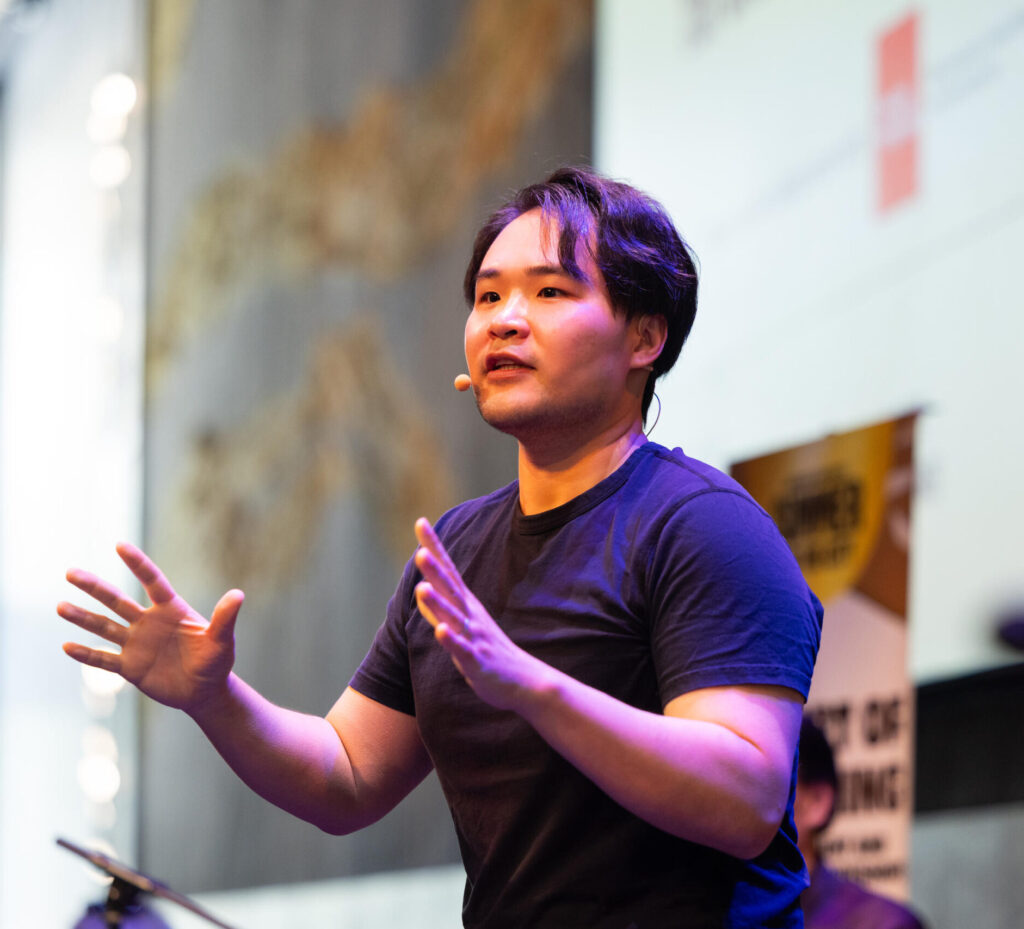
Raymond Lee
Tai Chi Ray
Raymond Lee (Tai Chi Ray) is a Tai Chi teacher, martial arts practitioner, and writer who has been teaching and sharing Tai Chi in New York since 2017. He began practicing martial arts at the age of seven and grew up in a family with more than five generations of involvement in Traditional Chinese Medicine. Ray explores Tai Chi through structure, coordination, awareness, natural movement, and the integration of body and mind. His work seeks not only to preserve traditional principles, but to make them understandable and meaningful in contemporary life.