JOURNAL · TAI CHI PRINCIPLES & MARTIAL ARTS
Song (鬆) is usually translated as “relaxation,” but that translation can easily lead us in the wrong direction. Tai Chi is not asking us to become limp or collapse. Song means learning to release unnecessary tension while preserving structure, balance, readiness, and the ability to respond.
IN THIS ARTICLE
What Is Song (鬆) in Tai Chi?
Why “Relaxation” Can Be Misleading
Song Needs Structure
What Are We Actually Relaxing?
Learning Song Through Wuji Standing
If You Relax, How Do You Move?
Can You Stay Song Under Pressure?
What Water Can Teach Us About Song
How Can You Practice Song?
Relaxed, but Ready
What Is Song (鬆) in Tai Chi?
If you have practiced Tai Chi for any length of time, you have probably heard a teacher tell you:
“Relax.”
Then perhaps you relaxed your shoulders.
And the teacher said:
“Relax more.”
You softened your arms.
Again:
“More relaxed.”
Eventually, a reasonable question appears:
If I keep relaxing, am I supposed to collapse onto the floor?
This is where the English word relaxation begins to create problems.
The Chinese word Song (鬆) is commonly translated as “relaxed” or “loose.” Those words point us in the right direction, but they do not completely describe what we are trying to cultivate in Tai Chi.
In my teaching, I often describe Song as:
Relaxed, but structured. Relaxed, but ready.
Song means releasing unnecessary muscular tension without abandoning the organization of the body.
You are not becoming less present.
You are not becoming weaker.
You are removing what you do not need while preserving what allows you to stand, move, balance, and respond.
Why “Relaxation” Can Be Misleading
When most people hear the word “relax,” they imagine rest.
Sitting on a sofa.
Lying in bed.
Letting the body become heavy.
Doing nothing.
There is nothing wrong with that kind of relaxation.
But Tai Chi asks for something more demanding.
Can you remain relaxed while standing?
Can you remain relaxed while shifting your weight?
Can you remain relaxed while one leg supports most of your body?
Can you remain relaxed while your arms move?
And eventually:
Can you remain relaxed when someone is pushing you?
This changes the meaning of relaxation completely.
Song is not relaxation because nothing is happening.
It is the ability to avoid unnecessary tension while something is happening.
That is much harder.
Song Needs Structure
One of the biggest misunderstandings about Song is that the softer the body becomes, the better.
That is incomplete.
If I remove all muscular activity from my body, I cannot remain standing.
Gravity will answer the question for me.
The body always needs enough organization to support the task.
The question is:
How much effort do I actually need?
Imagine holding your arm in front of you.
You need some muscular activity to keep the arm there.
But you may also be tightening your neck.
Lifting your shoulder.
Clenching your hand.
Holding your breath.
Tightening your chest.
None of those additional actions may be necessary for the simple task of holding the arm.
Song asks us to begin distinguishing between the effort that supports the movement and the tension that merely accompanies it.
Song does not mean using no effort. It means learning not to spend effort where it is unnecessary.
This is why structure matters.
Without structure, relaxation becomes collapse.
Without relaxation, structure becomes rigidity.
Tai Chi asks us to explore the space between those two extremes.
What Are We Actually Relaxing?
Many beginners are surprised by how much tension they carry without realizing it.
Raise your arms slowly and notice what happens.
Do the shoulders rise with them?
Does the neck tighten?
Do the fingers become stiff?
Does the jaw tighten?
Do you hold your breath?
Now shift your weight toward one leg.
Do you immediately grip the floor with your toes?
Do your thighs become much tighter than necessary?
Does your upper body stiffen because you do not completely trust your balance?
These reactions are not unusual.
Much of our tension is habitual.
The body has learned that when it is uncertain, using more muscular effort feels safer.
Sometimes that extra effort is useful.
But often it reduces our ability to feel what is happening.
A stiff shoulder does not move as freely.
A rigid body has fewer options when balance changes.
Excessive effort can make subtle adjustments harder to detect.
So Song is partly an investigation.
We begin asking:
What can I let go of without losing the movement?
Then we ask the question again.
And again.
Learning Song Through Wuji Standing
One of the fundamental ways I teach Song is through Wuji (無極) standing practice.
At first, standing still sounds easier than moving.
In practice, it can reveal a surprising amount about the way we use our bodies.
When there is no complicated choreography to distract you, you can begin noticing simpler questions:
Am I locking my knees?
Am I gripping with my thighs?
Am I squeezing my glutes?
Are my shoulders hanging naturally, or am I holding them up?
Can my breathing remain easy?
Can I allow the skeletal structure to support more of my weight instead of trying to hold myself upright with unnecessary muscular tension?
When students begin releasing some of their habitual gripping, they sometimes feel less stable at first.
Some of my students have described the sensation as shaky or wobbly.
Others have described it beautifully as:
“Like standing in a swimming pool.”
This can feel strange because the familiar muscular tension that previously told you, “I am stable,” has begun to loosen.
But unfamiliar does not automatically mean wrong.
You are beginning to investigate whether stability can come from better organization rather than simply from more tension.
If You Relax, How Do You Move?
This leads to one of my favorite questions.
If we keep reducing unnecessary muscular tension, eventually we may wonder:
If I stop using my arms and legs in the way I normally do, how am I supposed to move?
Water gives us one answer.
How does water flow?
Gravity.
Water does not have muscles. It does not contract itself in order to move downhill.
It responds to gravity and to the shape of its environment.
Of course, a human body is not water. We need muscular activity to control and direct movement.
But water gives us a useful question:
Do we have to manufacture every movement by contracting the part of the body that we want to move?
In Tai Chi, we can begin movement through sinking and shifting.
A change in the body’s weight creates a new relationship with the ground.
The feet receive that change. The legs participate. The waist and spine organize around it. The shoulders, arms, and hands become part of the same action.
I sometimes describe this as borrowing momentum from gravity.
We are not becoming passive.
We are learning to cooperate with forces that are already present rather than trying to create everything with isolated muscular effort.
This is one reason Song and whole-body movement belong together.
Can You Stay Song Under Pressure?
Standing quietly is only the beginning.
The more interesting question is whether Song survives when conditions become difficult.
Push-hands practice gives us a very clear test.
Imagine another person applies force and begins disturbing your balance.
What is your first reaction?
For most of us, it is very natural to tense.
The shoulders rise.
The chest stiffens.
The legs grip.
We may even stop breathing for a moment.
The body is trying to protect itself.
But excessive tension can also reduce our ability to adjust.
Tai Chi therefore asks a difficult question:
Can you remain relaxed and responsive when your balance is being challenged?
This is where Song becomes much more than a pleasant feeling.
It becomes a skill.
The same question appears when we generate force.
If you notice that your partner is momentarily off balance, you may want to rush forward and push with your arms.
That may feel faster.
But can you remain Song long enough for the whole body to participate?
Can the movement remain connected from the feet through the body to the hands rather than becoming an isolated arm action?
You do not need to practice martial arts to recognize this problem.
Think about losing your balance when a subway car suddenly moves.
Or trying to catch something unexpectedly.
Or pushing a heavy door that turns out to be much lighter than you expected.
The world constantly changes the amount and direction of force around us.
Remaining organized without immediately becoming rigid is useful far beyond push hands.
What Water Can Teach Us About Song
This is where Song connects naturally with water.
In What Does “Move Like Water” Mean in Tai Chi?, I wrote that water can yield without becoming powerless.
That is a useful image for Song.
Water does not become rigid when something enters its path.
It changes.
It moves around the obstacle.
It receives.
It redirects.
And it continues.
Song gives the body more possibility to do something similar.
If every joint is already locked and every muscle is already tense, there are fewer directions available when circumstances change.
Releasing unnecessary tension creates room for adjustment.
But again, this does not mean becoming limp.
Water may be soft, but it is not nothing.
Tai Chi softness is similar.
Softness is useful because it leaves room for change.
How Can You Practice Song?
Do not begin by trying to become completely relaxed.
That goal is too vague and often leads to collapse.
Instead, practice Song as a series of smaller questions.
Start with standing.
- Notice where you are gripping.
Scan the feet, thighs, glutes, abdomen, chest, shoulders, hands, neck, jaw, and face. - Release one area without changing everything else.
Can your shoulders soften without your chest collapsing? - Check your structure.
Are you still balanced? Can your skeleton continue supporting you? - Breathe naturally.
If releasing tension makes you hold your breath, you are probably forcing the relaxation. - Add a simple movement.
Slowly shift your weight or raise an arm. Notice which unnecessary tensions return. - Add uncertainty.
Change direction, stand on one leg briefly, or work with an appropriate partner exercise. Can you preserve some of the same Song when the task becomes harder?
The important point is that Song is not something you achieve once.
Every new movement, speed, direction, and external pressure may reveal another layer of unnecessary tension.
This is why I consider Song a lifetime practice.
Relaxed, but Ready
So what does Song really mean in Tai Chi?
“Relaxation” is a useful beginning, but it is not enough.
Song is not lying down.
It is not becoming limp.
It is not removing all muscular effort.
And it is certainly not becoming passive.
Song is the continuing practice of releasing what is unnecessary while preserving what the situation requires.
At first, that may mean noticing that your shoulders are tense while standing.
Later, it may mean maintaining the same quality while shifting weight or moving through a form.
Later still, it may mean remaining responsive when another person challenges your balance.
The circumstances become more difficult.
The principle remains the same.
Relax what you do not need. Keep what you do need. Remain ready for what changes next.
That is the quality I am trying to describe when I use the word Song.
FROM TAI CHI RAY’S NOTES
Second Step: Fundamentals, Fundamentals, Fundamentals
Song becomes more meaningful when it is tested rather than merely discussed. In Tai Chi Ray’s Notes No. 4, I explore how Jing (靜) and Song (鬆) deepen through standing, movement, and situations in which balance and whole-body organization are challenged.
CONTINUE READING
Why Tai Chi Movement Starts From the Ground
Song teaches us to release unnecessary tension without losing structure or readiness. But if we are not forcing movement with isolated muscular effort, where does a Tai Chi movement begin? Continue by exploring how changes in weight, gravity, and our relationship with the ground can organize movement through the whole body.
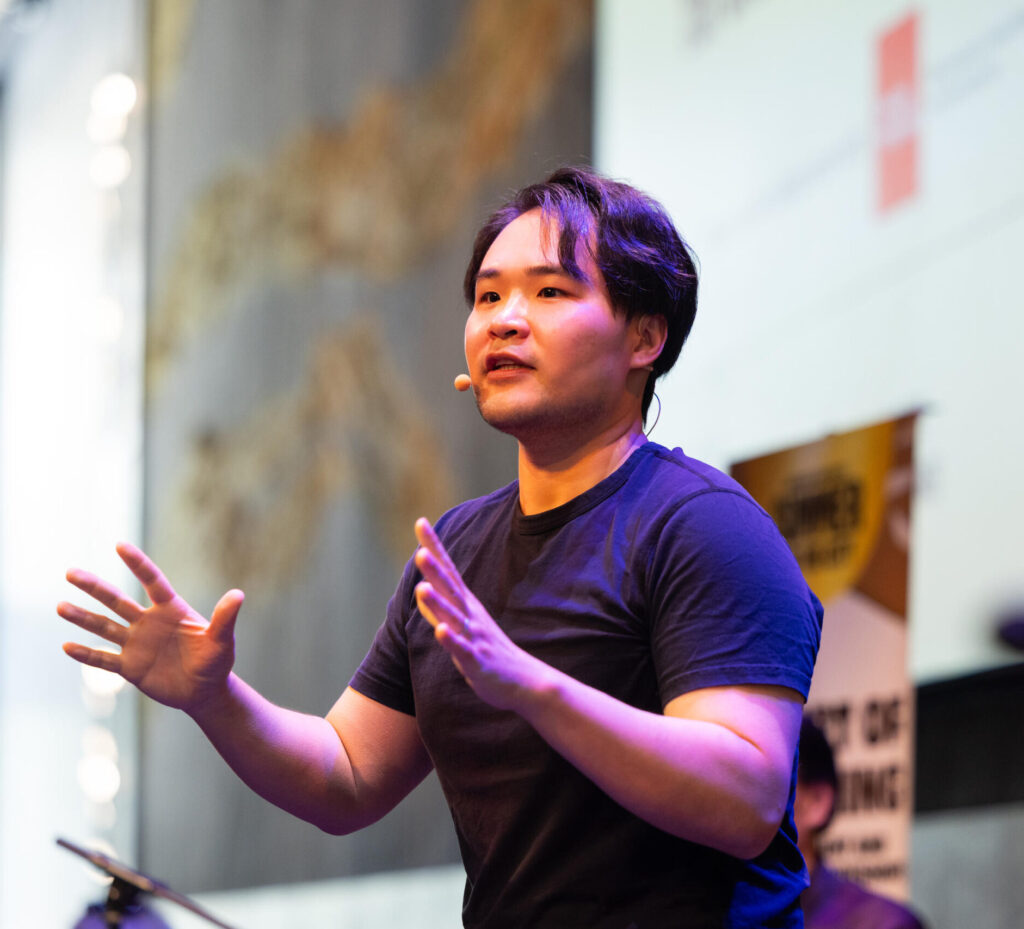
Raymond Lee
Tai Chi Ray
Raymond Lee (Tai Chi Ray) is a Tai Chi teacher, martial arts practitioner, and writer who has been teaching and sharing Tai Chi in New York since 2017. He began practicing martial arts at the age of seven and grew up in a family with more than five generations of involvement in Traditional Chinese Medicine. Ray explores Tai Chi through structure, coordination, awareness, natural movement, and the integration of body and mind. His work seeks not only to preserve traditional principles, but to make them understandable and meaningful in contemporary life.